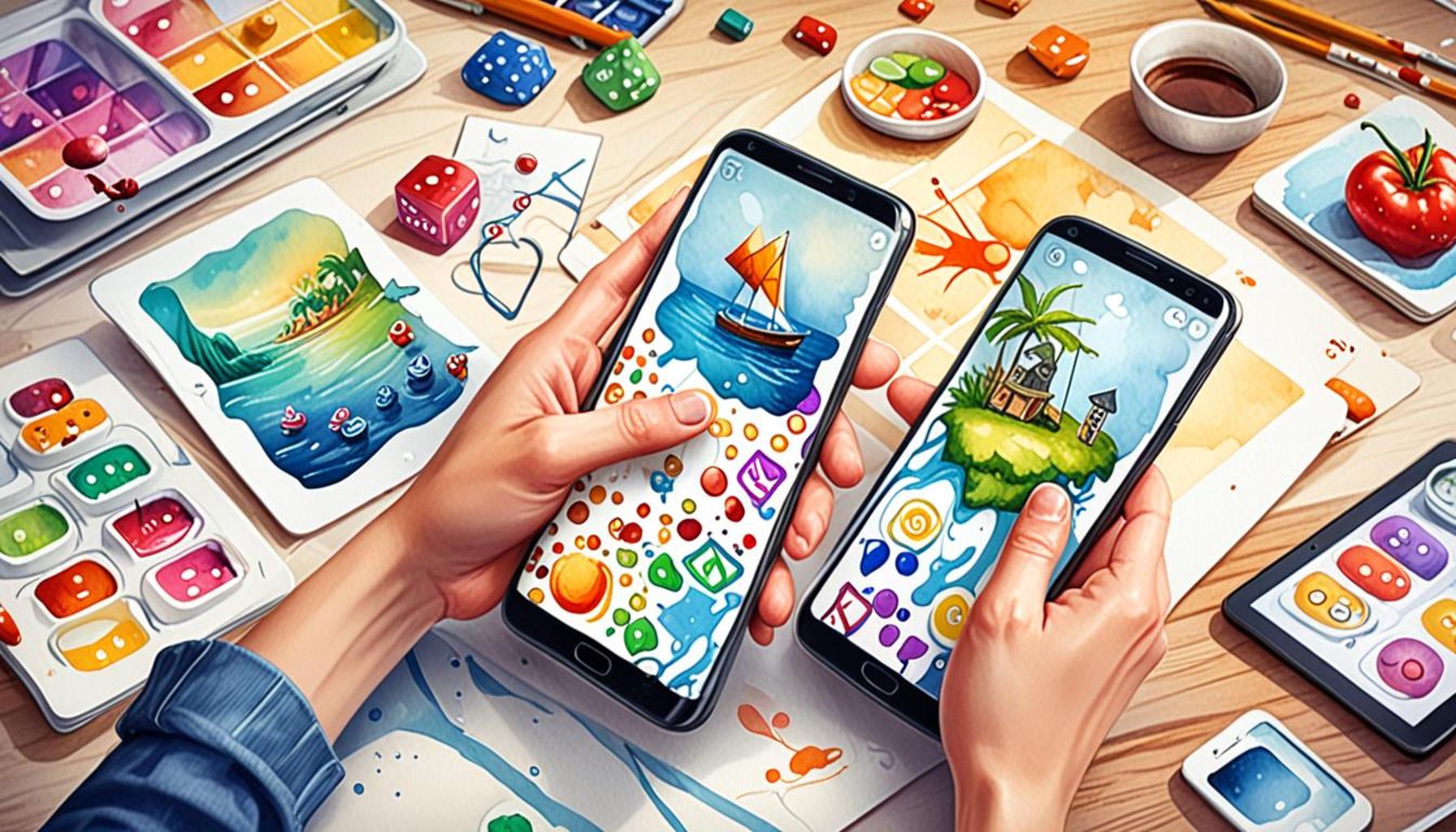
The Evolution of Puzzles: From Traditional Games to Digital Challenges and Their Solution Approaches
The Evolution of Puzzles
Puzzles have long captivated minds across generations, offering both entertainment and mental challenge. From ancient wooden jigsaws to modern digital brainteasers, the landscape of puzzles has undergone remarkable transformations. Today, we find ourselves navigating various puzzle types that cater to diverse interests and skill levels.
The journey of puzzles can be broken down into several key stages:
- Traditional Puzzles: Classic games like crossword puzzles, Sudoku, and Rubik’s Cube have remained popular for decades. Crosswords challenge vocabulary and general knowledge, appearing daily in newspapers and magazines across the United States. Sudoku, with its logical placement of numbers, has gained a devoted following, often appearing in apps and puzzle books. The Rubik’s Cube, invented in the 1970s, remains a staple of both physical and competitive puzzle-solving, with enthusiasts participating in speedcubing tournaments worldwide.
- Transition to Digital: The rise of mobile apps and online platforms has reinvented how we engage with puzzles. With apps like Wordle and 2048 gaining immense popularity, digital puzzles allow users to challenge themselves at any time. Online platforms have also introduced multiplayer options, letting friends and family collaborate or compete, a feature that adds a social dimension to solitary activities.
- Hybrid Formats: Incorporation of augmented and virtual reality into puzzle-solving experiences marks a new frontier. Games like Escape Room VR allow participants to solve intricate puzzles in immersive environments, bridging the gap between physical and digital experiences. This blend utilizes advanced technology to create an engaging puzzle environment, pushing the boundaries of traditional puzzle formats.
- Community Engagement: Online forums and social media platforms have created a global network of puzzle enthusiasts. Websites like Reddit and Facebook host groups where members share strategies, tips, and new puzzles. These communities foster connection and creativity, allowing enthusiasts to collaborate on new puzzle designs or participate in online challenges, spanning different cultures and languages.
Each evolution has introduced new solution approaches and methodologies for tackling these challenges. Traditional puzzles often rely on logic and deduction, while digital puzzles may incorporate algorithms and user-generated content. For instance, platforms like Puzzle Hunt encourage users to create and share their unique puzzles, ensuring that fresh challenges are always available. As we delve deeper into this intriguing progression, it becomes clear how cultural influences, such as the increasing popularity of puzzle competitions and the rise of escape rooms, and technological advancements have shaped the ways we perceive and solve puzzles.
Join us on this fascinating exploration of puzzles, as we uncover how they continue to evolve, reflecting not only our need for challenge but also our desire for connection and ingenuity. As the world moves forward, the landscape of puzzles will inevitably adapt, promising even more engaging experiences for both seasoned solvers and newcomers alike.
DISCOVER MORE: Click here to uncover innovative memory techniques
Shaping Puzzle History: Traditional Games and Their Enduring Legacy
The history of puzzles is rich and varied, reflecting cultural shifts and technological advancements over centuries. Traditional puzzles serve as the foundation from which modern equivalents have emerged. Each type has its unique characteristics, enriching the puzzle-solving experience.
At the heart of traditional puzzles lies a realm of problem-solving that encompasses various formats. Here are some prominent examples:
- Crosswords: Often considered the crème de la crème of word puzzles, crosswords challenge solvers to fill in a grid based on provided clues. A daily ritual for many in the United States, these puzzles serve as a benchmark of language skills and knowledge, with outlets such as The New York Times offering various difficulty levels to accommodate different solvers.
- Sudoku: Originating from Japan, this logic-based puzzle has exploded in popularity, capturing the attention of millions. Featuring a grid of numbers that must be filled in without repeating any digit in a row, column, or sub-grid, Sudoku puzzles come in varying degrees of difficulty. The accessibility of Sudoku in books and mobile applications has made it a staple in American households.
- Rubik’s Cube: This iconic 3D puzzle remains a symbol of intellectual challenge since its invention in the 1970s. With countless speedcubing competitions held worldwide, the Rubik’s Cube demonstrates not only manual dexterity but also strategic planning and spatial awareness—essential skills in approaching various types of puzzles.
Transitioning from traditional to modern means, puzzles not only provide entertainment but also serve educational purposes. They enhance critical thinking, foster creativity, and contribute to cognitive development. Research suggests that engaging with puzzles can improve memory function and problem-solving abilities, making them valuable tools in both developmental and adult learning contexts.
As society has progressed, so too have the methods with which we solve these puzzles. In traditional formats, solutions often revolve around basic logic and deduction. However, today’s digital challenges have incorporated complex algorithms, providing new frameworks for approaching problem-solving. For example, players tackling Wordle must combine vocabulary knowledge with strategic guessing, while simultaneously learning from each attempt to refine their approach.
This evolution in puzzle-solving techniques speaks to a broader cultural engagement with these brain teasers. Traditional puzzles encourage solitary reflection, while digital formats invite social interaction—whether through online leaderboards, collaborative apps, or competitive gaming. Puzzles are no longer a solitary pursuit; they have evolved into a shared experience that fosters community among enthusiasts across various platforms.
With technology continuously advancing, the next phase of puzzle evolution promises to be even more dynamic. As we prepare to explore the transition to digital puzzles and their impact on puzzle-solving approaches, it becomes clear that this journey illuminates not only our collective passion for puzzles but also our innate desire for connection. The evolution of puzzles serves as a testament to the enduring human spirit of curiosity and creativity.
The journey of puzzles has evolved remarkably from traditional formats to a plethora of digital challenges that captivate modern audiences. This transformation not only reflects shifts in technology but also changes in societal engagement with problem-solving activities. Digital puzzles have emerged as a dynamic frontier, marrying entertainment with cognitive development. They cater to diverse audiences and leverage the interactive capabilities of modern devices, ensuring that they remain relevant in an ever-changing landscape.
One of the most significant advantages of digital puzzles is their ability to offer personalized experiences. Unlike traditional games, which often follow a single narrative or set of rules, digital formats can adapt to individual skill levels. This provides players with the ideal balance of challenge and enjoyment, promoting sustained engagement. Furthermore, the collection of user data enables developers to refine these experiences continuously, making the puzzles increasingly appealing over time.
The shift from tangible pieces to virtual layouts has also led to a change in accessibility. With just a smartphone or computer, users can access an infinite array of puzzles. This accessibility extends to diverse demographics, allowing people from various backgrounds and locations to experience and contribute to this evolving genre. With online communities dedicated to puzzle solving, players can connect globally, sharing strategies, tips, and solutions, thus enriching the overall experience.
Additionally, digital challenges often incorporate gamification elements, such as rewards, leaderboards, and achievements, which enhance motivation and foster friendly competition. This transformation not only makes solitary solving more engaging but also encourages social interactions. Users can challenge friends or collaborate online, creating a vibrant community centered around puzzles. As a result, digital challenges not only entertain but also build relationships, proving that the social aspect of puzzle solving remains intact in the modern age.
| Category 1 | Category 2 |
|---|---|
| Digital Puzzles | Adaptability to individual skill levels enhances engagement and enjoyment. |
| Accessibility | Available to diverse demographics through smartphones and computers. |
Furthermore, the evolution of puzzles into the digital domain has initiated innovations in the types of challenges available. Interactive storylines, augmented reality, and multi-player formats have introduced fresh dynamics, allowing for new problem-solving approaches. Such advancements in gameplay mechanics keep the experience invigorating and enlightening. As technology continues to progress, it is clear that the future of puzzles will bring even more exciting changes, offering a delightful blend of learning, leisure, and social interaction.
DISCOVER MORE: Click here to enhance your cognitive skills
Transitioning to Digital: The Rise of Modern Puzzle Solving
As we delve into the realm of digital puzzles, it is essential to comprehend how they have transformed the landscape of puzzle-solving. The digital age offers puzzles that are more interactive and versatile than their traditional counterparts, reflecting our ever-evolving relationship with technology. These modern challenges not only entertain but also engage users on multiple cognitive levels, proving that solving puzzles can be a profound experience rather than merely a recreational activity.
One striking example is the meteoric rise of mobile apps like 2048 and Candy Crush Saga. These games have reshaped the way people perceive and engage with puzzles. Unlike traditional puzzles that often require pen and paper, mobile games create immersive environments that encourage users to strategize in real-time while competing against friends and strangers alike. Studies indicate that the social interaction facilitated by these platforms aligns with a growing trend of community-oriented entertainment, blending individual challenge with collaborative play.
Another noteworthy trend is the incorporation of augmented reality (AR) and virtual reality (VR) technologies in puzzle games. Titles like Pokémon GO have introduced innovative ways to engage with the world around us, prompting users to solve puzzles in real environments. This advancement opens up a new dimension in puzzle-solving approaches, as players must not only rely on their cognitive abilities but also navigate physical spaces, heightening the excitement and complexity of the experience.
The shift towards digital platforms isn’t just about entertainment but also about accessibility and inclusivity. Online platforms enable puzzle enthusiasts with differing skill levels to access a vast array of challenges tailored to their preferences, often for free or at minimal cost. Sites like PuzzleNation or apps such as Braid highlight this accessibility, offering puzzles in a vast spectrum of difficulties while fostering healthy competition among solvers. Furthermore, the ability to connect with a global audience encourages cultural exchange around puzzles, giving rise to variations unique to different regions and enhancing the overall puzzle-solving experience.
The algorithms powering these digital puzzles also warrant attention. Many modern puzzles incorporate machine learning and AI technologies, allowing for dynamically generated challenges that adapt to the player’s skill level. For instance, platforms like Chess.com utilize AI to adjust game parameters based on player performance, enticing users to continuously improve. This innovative approach exemplifies a transformative shift from static puzzles toward more engaging, evolving experiences that keep players invested.
Moreover, the psychological implications of solving digital puzzles cannot be overlooked. Researchers have found that participating in digital puzzles can enhance cognitive functions such as attention span, working memory, and even emotional resilience. This convergence of fun and cognitive exercise reflects a growing trend where individuals seek puzzles not just for their challenging nature, but for their profound benefits to mental health.
In summary, the transition from traditional to digital puzzles represents an evolution that encompasses technology, social interaction, and cognitive development. As we explore how these changes reshape our interaction with puzzles, it becomes evident that the journey of puzzle-solving is not merely about the puzzles themselves but also about the broader implications they have on society, learning, and personal growth.
DIVE DEEPER: Click here to uncover the secrets of puzzles and well-being
Conclusion: Embracing the Future of Puzzle Solving
The journey of puzzles from their traditional roots to today’s digital gaming landscape highlights a fascinating evolution that reflects our changing interactions with technology and community. As we have seen, the rise of mobile apps and the integration of advanced technologies such as augmented reality and artificial intelligence are not just reshaping how we engage with puzzles but also enhancing the depth and variety of challenges available. These innovations pave the way for a more inclusive world where everyone, regardless of skill level, can participate and enjoy the cognitive benefits of puzzle-solving.
Furthermore, the psychological effects of digital puzzles underscore their value as tools for cognitive enhancement and emotional well-being. As individuals increasingly seek mental stimulation and social connection, digital puzzles provide both fun and profound benefits, making them an essential part of modern entertainment.
As we move forward, it will be intriguing to observe how the merging of technology and puzzle-solving continues to evolve. Will we see even more immersive experiences that challenge the boundaries of reality? Or will the digital space give birth to entirely new genres of puzzles? One thing remains certain: the future of puzzles is bright, offering endless possibilities for innovation, learning, and connection in a swiftly changing world. To truly appreciate this journey, we must remain open to exploring these new horizons while cherishing the traditional roots that have made puzzle-solving a cherished pastime for generations.