
The effectiveness of board games in promoting logical reasoning and mathematical skills in children
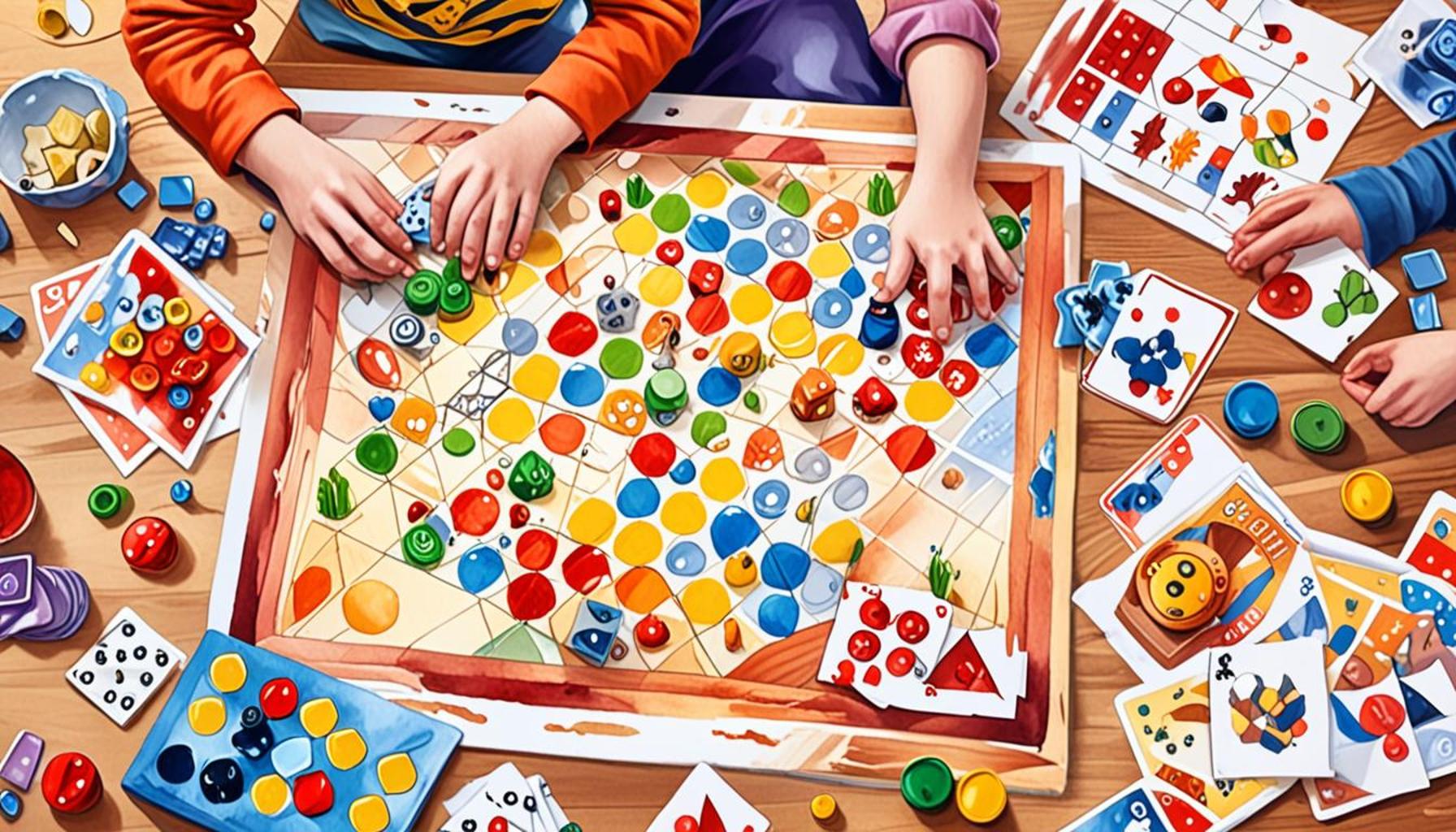
Understanding the Impact of Board Games on Cognitive Development
In today’s fast-paced digital era, the resurgence of traditional board games is notable, particularly as they relate to the cognitive development of children. While often seen simply as forms of entertainment, these engaging games have been shown to hold significant educational value. They are not just tools for leisure; they serve as vital platforms for nurturing logical reasoning and mathematical skills in young minds.
Research underscores the benefits of regular board game play; findings reveal improvements across numerous cognitive areas. For example, when children interact with games such as chess, they must assess the game’s state and develop strategies for winning, thereby enhancing their critical thinking skills. Games like Scrabble facilitate vocabulary building while also sharpens players’ ability to quickly analyze potential word formations. These activities make the brainstorming of solutions and predicting outcomes fundamental aspects of play, which are essential for robust cognitive development.
Additionally, many board games present well-defined problems that require innovative problem-solving strategies. In games like Ticket to Ride, players must plan routes and allocate resources efficiently, fostering logical reasoning as they learn to navigate obstacles and optimize their paths to victory. Such challenges promote not only analytical thinking but also resilience and patience, qualities that will benefit children in their academic and personal lives.
Mathematical concepts frequently emerge within the framework of board games. Activities such as counting tokens in Monopoly or calculating the chances of drawing specific cards in Settlers of Catan incorporate basic arithmetic and probability principles into seamless gameplay. These experiences can demystify mathematical concepts, turning what might traditionally be perceived as dry or challenging into enjoyable interactive lessons.
Moreover, board games are often a collaborative experience, promoting social skills through teamwork and healthy competition. Engaging in gameplay with friends or family fosters communication and strengthens relationships. The shared experiences of strategizing and celebrating victories together allow children to practice essential socialization skills, such as taking turns and respecting others’ perspectives.
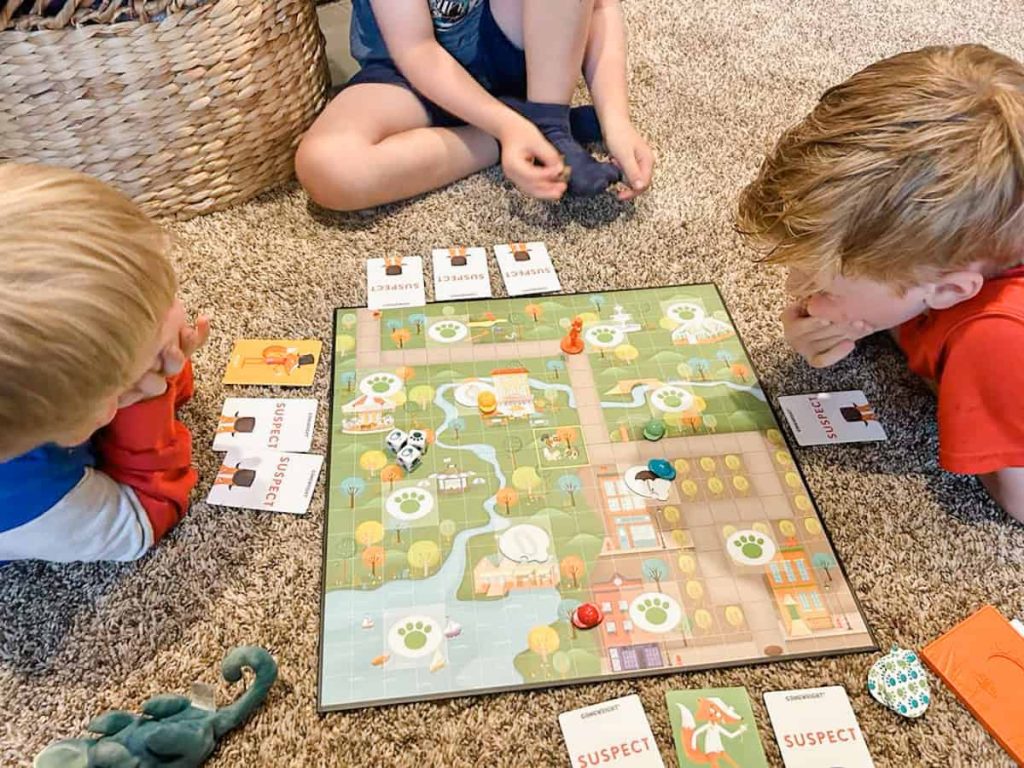
As board games gain traction in homes and classrooms across the United States, parents and educators are recognizing their potential as complementary educational tools. They encourage a shift from passive screen time to active learning, offering an opportunity for parents to engage in their child’s educational journey. This rising interest lays the groundwork for further exploration into how board games can significantly bolster a child’s cognitive and social development.
In conclusion, board games present an innovative approach to learning that allows for the cultivation of critical cognitive skills while also providing an avenue for bonding between children and their peers. As research continues to evolve, understanding their educational benefits will only deepen, revealing even more reasons to integrate these enriching games into children’s daily routines.
DISCOVER: Click here for more insights
The Cognitive Advantages of Engaging with Board Games
The effectiveness of board games in promoting logical reasoning and mathematical skills in children is a topic gaining traction among educators and parents alike. These games not only engage children in a playful manner but also serve as catalysts for developing essential cognitive abilities. By introducing children to structured challenges wrapped in fun, board games create an environment where they can learn critical skills often overlooked in traditional educational settings.
One of the key benefits of board games is their inherent requirement for players to make decisions, often with limited information. For instance, in strategy-based games like Risk and Settlers of Catan, children must evaluate potential moves and anticipate their opponents’ actions. This process of weighing options enhances their decision-making skills as they consider both short-term outcomes and long-term implications. As they contend with unexpected scenarios, they also cultivate a sense of adaptability, which is crucial for effective problem-solving.
In addition to sharpening decision-making abilities, board games often incorporate mathematical elements that seamlessly integrate learning into play. Take, for example, classic games like Monopoly. Players must manage finances as they buy, sell, and trade properties, all while keeping track of currency and calculating profit margins. This regular engagement with basic arithmetic and financial literacy sets the stage for practical applications of math in real life. Similarly, in games such as Qwirkle, players need to recognize patterns and relationships, fostering skills in geometry and spatial awareness.
Here are some ways in which board games boost mathematical skills and logical reasoning:
- Quantitative Reasoning: Counting resources, understanding probabilities, and making predictions are common in many games.
- Strategic Planning: Players must devise strategies that often involve calculating risks versus rewards, refining their ability to think critically.
- Pattern Recognition: Games like Connect Four require players to recognize patterns and foresee potential outcomes, building their analytical skills.
- Collaborative Problem Solving: Many board games emphasize working together to achieve objectives, encouraging discussions around strategies and shared problem-solving techniques.
In essence, board games possess an educational power that extends far beyond mere entertainment. They stimulate children’s curiosity and creativity while prompting them to think logically about the world around them. Moreover, they provide a valuable opportunity for families to bond through play, reinforcing social skills in a collaborative setting. Encouragement to engage in regular board game play can yield significant dividends, paving the way for increased academic success while making learning a shared and enjoyable experience.
As interest in holistic education strategies grows, exploring the role of board games in nurturing logical reasoning and mathematical skills becomes increasingly important. This exploration could spark a new wave of instructional methodologies that capitalize on the timeless appeal of board games, ensuring children not only play but also learn through their experiences.
| Category | Key Features |
|---|---|
| Enhanced Problem-Solving Skills | Board games require strategic thinking and planning, allowing children to develop strong problem-solving abilities. |
| Improved Mathematical Understanding | Many board games incorporate counting, addition, and subtraction, reinforcing essential math skills in a playful way. |
Board games are not just a source of entertainment; they are a powerful tool for learning. Research shows that participating in board games can significantly enhance children’s logical reasoning abilities. These games encourage children to think critically about their moves and anticipate their opponents’ strategies, fostering a mindset that values problem-solving and critical thinking. Furthermore, the interactive nature of board games makes learning math concepts enjoyable. Many games require players to keep score, make calculations, and apply mathematical logic, effectively transforming abstract concepts into tangible experiences. Children may barely notice how much they are learning, as they engage in friendly competition and collaborate with others. The social aspect of board games also helps develop communication and teamwork skills, which are just as crucial for their overall development. By integrating play with learning, board games present an ideal environment for cognitive growth, prompting both parents and educators to explore their potential further.
DISCOVER MORE: Click here to enhance your mental agility
Fostering Essential Life Skills Through Board Games
The role of board games in enhancing logical reasoning and mathematical skills extends beyond academic performance. These games encourage the development of essential life skills that children will carry with them into adulthood. For instance, communication and leadership abilities are significantly cultivated during group play. As players articulate their strategies and collaborate toward shared goals, they engage in constructive dialogue, enhancing their verbal skills and confidence in expressing thoughts. This aspect is critical in educational settings where peer interactions are vital for a child’s social development.
Moreover, board games introduce the concept of goal setting and achievement. Games such as Ticket to Ride not only require players to plan their routes strategically but also allow them to visualize their goals as they work toward collecting sets. Each successful completion of a route instills a sense of accomplishment, demonstrating the tangible benefits of perseverance and planning. Children learn early that achieving a goal is often a result of methodical decision-making and resilient effort, qualities that are indispensable in various facets of life.
The quantitative aspects of board games represent a natural segue into numerical literacy. Children often encounter decimals, fractions, and even basic multiplication in games like Catan where resources must be traded and calculated. Research reveals that engaging with these concepts in a game context can increase mathematical familiarity and comfort. The National Council of Teachers of Mathematics emphasizes the importance of contextual learning where math is integrated with real-world scenarios. Board games exemplify this by integrating mathematics into exciting narratives that captivate students’ attention.
In addition to fostering numerical skills, many board games improve spatial reasoning, which is increasingly recognized as a fundamental competency. Games such as Blokus challenge players to fit pieces onto a board with limited options, requiring them to visualize spatial relationships and think three-dimensionally. Evidence from educational studies shows that enhanced spatial reasoning is associated with improved achievements in STEM (Science, Technology, Engineering, and Math) fields. Hence, board games can subtly prepare children for careers in these high-demand areas.
Furthermore, the adaptability that board games cultivate cannot be overlooked. In games with constantly fluctuating dynamics, such as Carcassonne, players learn to pivot their strategies based on new information and changing circumstances. This skill of adjusting to new situations is imperative in today’s fast-changing world where the ability to think on one’s feet is invaluable.
- Emotional Intelligence: Many board games foster emotional regulation as children learn to navigate winning and losing, reflecting essential elements of competition and resilience.
- Critical Analysis: Board games encourage players to analyze their opponents’ strategies, developing a critical mindset that extends to real-world situations.
- Time Management: In timed games, children sharpen their ability to make decisions swiftly, an essential skill in both academic and occupational settings.
The multitude of benefits that arise from regular board game play highlights their value in a child’s development beyond mere enjoyment. These games offer a rich tapestry of opportunities for children to refine their logical reasoning and mathematical skills while simultaneously garnering essential life lessons. The interplay of fun and education found in board games is crucial for cultivating well-rounded individuals ready to tackle both academic challenges and life itself.
DIVE DEEPER: Click here to enhance your strategic thinking
Concluding Insights on Board Games and Skill Development in Children
In summary, the effectiveness of board games in promoting logical reasoning and mathematical skills in children is both profound and multifaceted. As we’ve explored, these entertaining activities transcend traditional learning environments, acting as interactive platforms where children engage with essential cognitive skills. Through structured gameplay, children not only develop mathematical literacy—grappling with concepts like fractions, probability, and strategic calculation—but also foster critical thinking and problem-solving capabilities.
Moreover, the social dynamics intrinsic to board games cultivate vital soft skills such as communication, teamwork, and emotional resilience. Children learn to navigate wins and losses gracefully, an exercise in perseverance that enhances their emotional intelligence. The ability to adapt strategies in fast-paced games prepares young players for the unpredictability of real-life situations, reinforcing the importance of flexibility and decisive action.
As we consider the implications of these findings, it becomes clear that embracing board games as educational tools can significantly enrich children’s developmental experiences. Educators and parents alike should prioritize integrating such activities in playtime and learning spaces. By doing so, they can create an engaging environment that not only entertains but also educates, setting the stage for a generation equipped with the cognitive and emotional tools necessary to thrive in an increasingly complex world.
Ultimately, the benefits of board games extend well beyond entertainment; they represent a unique intersection of education and enjoyment that holds the potential to positively influence children’s futures. As research continues to surface, emphasizing the significance of play in learning, one may ask—how many more opportunities for growth can we uncover simply by rolling the dice?