How Different Puzzle Formats Affect Memory Enhancement and Learning

Puzzles are more than just a pastime; they can be powerful tools for memory enhancement and learning. From crosswords to Sudoku, engaging with different puzzle formats stimulates our brains in unique ways. Understanding how these various formats impact cognitive functions can unlock new pathways to improve memory and learning.
Impact of Puzzle Formats
Each type of puzzle offers distinct features that contribute to cognitive development, and discovering these can provide insights into how we can engage our minds more effectively.
- Crossword Puzzles: These classic brain teasers are not only entertaining but serve to enhance vocabulary and improve recall abilities. As players search for synonyms or recall specific terms, they are exercising their memory and expanding their word bank. The challenge of filling in the blanks with clues encourages active retrieval of information, which studies have shown can lead to a measurable increase in verbal memory skills.
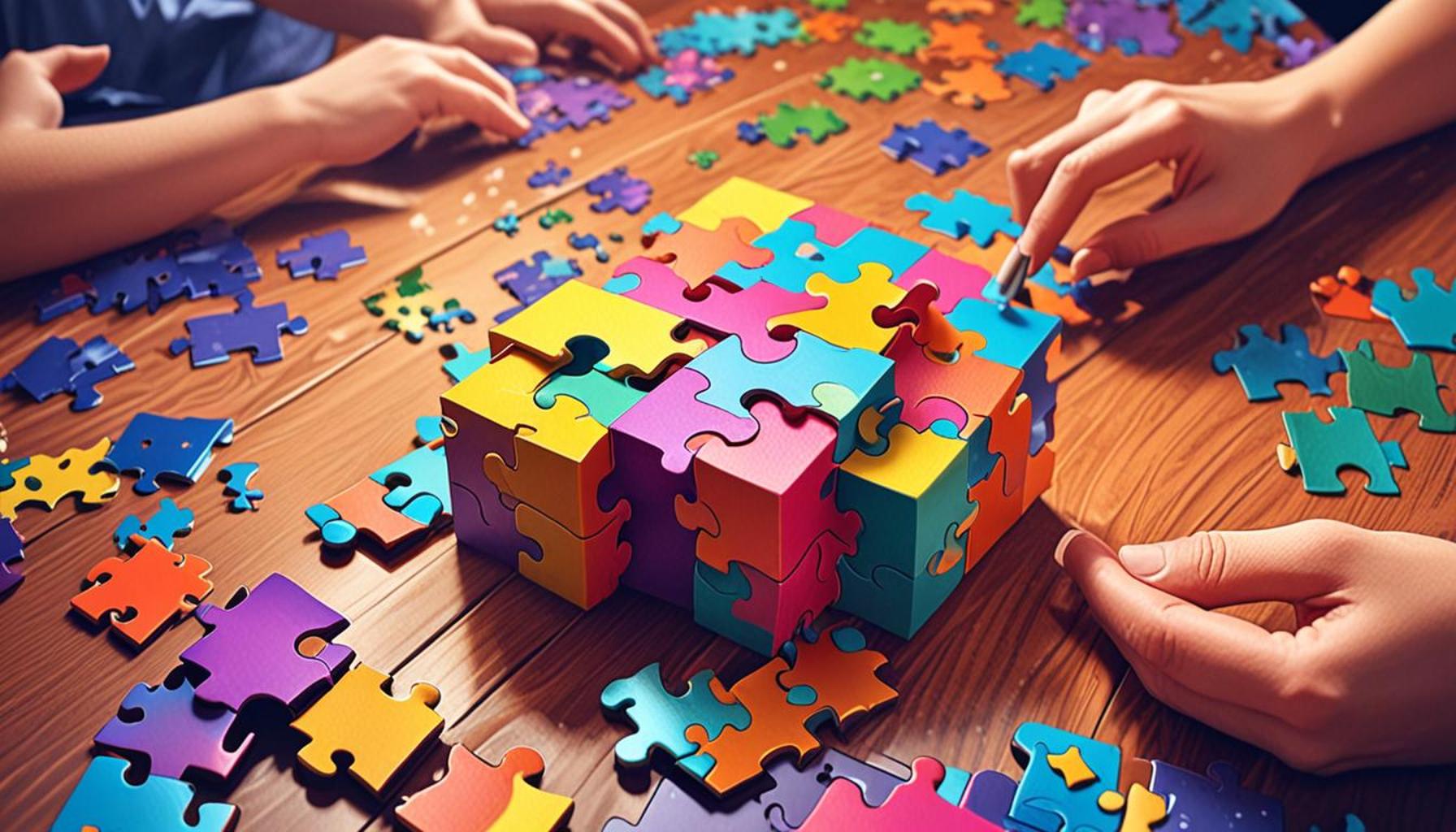
- Jigsaw Puzzles: These cognitive challenges significantly boost spatial awareness and problem-solving skills. By manipulating pieces to find where they fit, individuals enhance their ability to visualize and rotate objects in their minds. Research has indicated that frequent engagement with jigsaw puzzles can lead to improved performance on tasks requiring spatial reasoning, which is crucial for fields like architecture and engineering.
- Logic Puzzles: These puzzles, which might include Sudoku or more complex brain teasers, are designed to foster critical thinking and analytical skills. They require players to analyze information, draw conclusions, and make inferences based on given clues. This kind of structured thinking can benefit academic performance and real-world problem-solving abilities.
Research suggests that engaging with puzzles not only keeps the mind sharp but can also create lasting neural connections. For instance, studies indicate that solving puzzles can:
- Increase brain plasticity, which is the brain’s ability to reorganize itself by forming new neural connections throughout life.
- Boost short-term memory, as the process of remembering clues and pieces strengthens the brain’s ability to store information temporarily.
- Enhance overall cognitive function, as various studies have linked regular puzzle-solving with a lower risk of cognitive decline in older adults.
This article will explore these different formats and their specific benefits. We will delve into the latest findings and provide insights into how you can leverage puzzles to bolster your memory and learning. Whether you are a student, educator, or simply a puzzle enthusiast, there’s much to discover in the world of cognitive games.
As you engage with puzzles, you may also find that they foster a sense of accomplishment and boost mental resilience, further enhancing your learning capacity. Investigating these formats not only helps sharpen your mind today but builds the foundation for a more agile brain well into the future.

DIVE DEEPER: Click here to discover how puzzles can enhance your cognitive skills
Connecting Puzzle Formats to Cognitive Development
Understanding the unique strengths of different puzzle formats is essential for maximizing their benefits for memory enhancement and learning. Each puzzle type engages different cognitive functions, thereby sculpting the brain in remarkable ways. For example, crossword puzzles not only enrich vocabulary but also enhance the brain’s retrieval mechanisms, which are critical for memory retrieval. When players grapple with clues, they actively activate neural pathways associated with language processing and recall—an exercise that contributes to heightened verbal abilities.
In contrast, jigsaw puzzles invite players into a world of visual perception and tactile interaction. The act of piecing together these fragmented images requires not only patience but also a keen sense of spatial reasoning. This format specifically nurtures the brain’s visual-spatial skills, which are essential for a variety of professions, from artwork to engineering. Engaging regularly with jigsaw puzzles can also develop areas of the brain responsible for navigation and imagination, which studies suggest may contribute to improved overall cognitive flexibility.
Benefits of Engaging with Puzzles
The positive impact of puzzles extends beyond mere entertainment, as evidenced by numerous studies linking puzzle-solving with enhanced cognitive function. Engaging with different types of puzzles can:
- Improve memory retention: Solving puzzles often requires recalling previously acquired knowledge, which helps reinforce memory pathways.
- Foster critical thinking: Logic puzzles challenge players to think critically and analyze data, fostering a mindset that can benefit academic pursuits.
- Strengthen problem-solving skills: The unique challenges posed by each puzzle type can refine one’s approach to problem-solving in real-life situations.
- Enhance perseverance: Overcoming the difficulties associated with complex puzzles promotes resilience, an important trait for continued learning.
The interplay of these elements highlights why engaging with various puzzle formats is not just a leisure activity; it is a vital cognitive workout. By exposing ourselves to different formats, we sharpen our minds in ways that go beyond straightforward memorization. Instead, we cultivate skills that enhance our overall ability to learn and adapt.
As we continue to navigate the compelling landscape of puzzles and their cognitive benefits, it’s clear that there’s much at stake in the quest for knowledge and memory enhancement. Choosing the right type of puzzle can serve as a springboard for personal growth, providing unique challenges that build a more versatile mind. Whether driven by competition or personal interest, immersing ourselves in puzzles potentially equips us with a wealth of cognitive tools to thrive in both educational and everyday contexts.
| Puzzle Format | Memory and Learning Benefits |
|---|---|
| Crossword Puzzles | Enhances vocabulary retention and boosts problem-solving skills by encouraging the recall of various terms. |
| Jigsaw Puzzles | Improves spatial recognition and visual memory, as well as fosters concentration as players assemble pieces into a coherent image. |
| Sudoku | Enhances logical thinking and numerical memory, perfect for sharpening cognitive functions through structured challenges. |
| Word Searches | Promotes quick word recognition and boosts cognitive speed as players search for terms within a grid. |
Engaging with different puzzle formats offers a multifaceted approach to enhancing memory and learning capabilities. For instance, crossword puzzles not only serve as a fun pastime but also significantly contribute to vocabulary retention by pushing players to recall and apply various terms. Jigsaw puzzles tap into visual memory, necessitating players to visualize pieces and shapes as they strive to create a complete picture, thereby enhancing spatial recognition.Sudoku, known for its logical structure, deepens users’ numerical memory while improving logical thought processes. It is remarkable how structured challenges like these can sharpen cognitive functions in entertaining ways. On the other hand, word searches capture attention with their quick-paced format, enhancing cognitive speed as players search for words within an array of letters. Exploring these diverse puzzle formats can lead readers to discover effective strategies for boosting their cognitive abilities in enjoyable and stimulating ways.
DISCOVER MORE: Click here to unlock the secrets of Sudokus!
The Influence of Puzzle Formats on Learning Styles
Diving deeper into the realm of cognitive enhancement, it’s imperative to explore how various puzzle formats cater to distinct learning styles. Each format appeals to gamers’ preferences and capabilities, highlighting the need for a personalized approach to memory development and learning. For learners who thrive on visual input, pattern recognition puzzles, such as Sudoku, offer a perfect avenue for growth. As players focus on identifying numerical sequences, they not only develop mathematical skills but also boost their ability to recognize complex patterns—abilities that are essential in fields ranging from data analysis to science.
On the other hand, word search puzzles tap into the linguistic intelligence sphere. These puzzles enhance not just vocabulary but also reinforce reading skills and improve attention to detail. By searching for hidden words, players engage their brains in a dynamic exercise of visual scanning and language recognition. Research indicates that this repetitive practice can lead to significant improvements in reading fluency, an essential asset as students progress through their educational journeys.
Puzzle Format and Age Demographics
The capacity of different puzzle formats to impact memory enhancement is also markedly influenced by demographic factors, particularly age. For instance, studies indicate that older adults engaging in crossword puzzles show improved cognitive resilience, delaying the onset of memory-related conditions such as dementia. As these puzzles require recall and engagement with complex language structures, they serve as a cognitive shield, fostering a lifelong commitment to mental exercise. In this way, puzzles can act as a valuable tool for aging populations seeking to maintain cognitive health.
Further supporting this notion, educational institutions across the United States have begun incorporating puzzle formats into curricula, recognizing their potential to engage students of all ages. Innovative programs utilize jigsaw and logic puzzles to teach STEM concepts, enabling students to grasp intricate principles through interactive learning. This hands-on approach cultivates an environment ripe for inquisitiveness, enhancing comprehension while making learning enjoyable.
Emergence of Digital Puzzles and Cognitive Benefits
As technology advances, the transition of puzzles into digital formats has introduced unique avenues for learning enhancement. Online platforms and mobile applications now offer a wide range of puzzles, from interactive crossword games to immersive escape-room-style challenges. These platforms utilize gamification elements to further engage players, rendering puzzles more accessible and appealing to younger demographics. The use of technology in puzzle-solving not only maintains the cognitive benefits associated with traditional formats but also adapts them to suit the modern learner’s needs.
Moreover, research highlights that digital puzzles often foster collaboration among users, particularly in multiplayer settings. This interaction can enhance social learning experiences, promoting teamwork and communication skills. Such social dynamics can be particularly beneficial in educational environments, where group problem-solving can significantly improve knowledge retention.
In summary, the wide array of puzzle formats available today serves as a critical resource for enhancing memory, learning, and cognitive skills. Whether through traditional board games or modern digital applications, these engaging activities differentiate themselves based on user preferences and cognitive needs, ultimately reinforcing the connection between puzzles and cognitive development.
Dive Deeper: Click here to discover more
Conclusion: Unlocking Potential Through Puzzles
In conclusion, exploring how different puzzle formats affect memory enhancement and learning has revealed invaluable insights into cognitive development. Each puzzle type—ranging from pattern recognition and word searches to crosswords and digital puzzles—offers distinct advantages that cater to diverse learning styles and age demographics. These formats not only engage the mind but also ensure that the learning process remains enjoyable and stimulating, encouraging learners of all ages to participate and thrive.
The implications of using puzzles as educational tools extend far beyond mere entertainment. As evidenced by various studies, the incorporation of puzzles in educational settings fosters improved cognitive resilience, enhances memory retention, and sharpens essential skills across mathematical and linguistic domains. With the emergence of digital platforms, learners can now access an expansive array of puzzles that promote collaboration and teamwork, thereby enhancing social learning experiences critical for both academic and personal growth.
As society increasingly recognizes the significance of cognitive healthcare, especially among older adults, puzzles stand out as a proactive strategy for maintaining mental acuity and combating cognitive decline. This is especially pertinent as aging populations seek activities that serve as both mental exercise and a source of enjoyment.
Ultimately, whether engaging with traditional formats or embracing innovative digital solutions, puzzles offer a multifaceted approach to learning and memory enhancement. As we continue to dissect the cognitive benefits these engaging activities present, it becomes apparent that integrating puzzles into our lives can significantly enrich our collective learning experiences.