Group Dynamics: How Solving Puzzles in Teams Increases Social Cohesion
Understanding the Dynamics of Group Problem Solving
Have you ever noticed how solving puzzles can transform a group of strangers into a cohesive team? This transformation relies on key principles of group dynamics that enhance social bonds and improve collaborative efforts. Engaging in activities like puzzle-solving not only taps into individual cognitive skills but also fosters a shared sense of achievement and belonging among participants.
Consider the multifaceted impact that puzzle-solving can have on teamwork:
- Enhanced Communication: Team members are encouraged to express their thoughts and ideas clearly, which is crucial during high-pressure situations. For instance, a team tackling a complex jigsaw puzzle must articulate which pieces they believe fit where, honing their ability to communicate effectively in any collaborative environment.
- Trust Building: Collaboration in such tasks requires individuals to depend on one another, inevitably fostering trust. When members feel confident that their teammates will contribute meaningfully, they are more likely to take risks in other collaborative endeavors, both personally and professionally.
- Conflict Resolution: Differences in opinion are inevitable in team settings. Engaging with differing viewpoints while solving puzzles can enhance group resilience. For example, two team members might disagree on a strategy to approach a puzzle, but working through this conflict can lead to better decision-making skills in the future.
- Shared Goals: Working toward a common objective, such as completing a puzzle within a set time, fosters camaraderie among participants. This shared goal drives the group to enhance its collective problem-solving abilities, making it a more harmonious and productive environment.
Research indicates that teamwork in puzzle-solving activities can significantly improve social cohesion. In various environments, such as workplaces or community groups, these dynamics lead to the establishment of lasting relationships and heightened morale. Companies like Google and Zappos have even incorporated team-building exercises, such as escape rooms and puzzle challenges, into their corporate culture, underlining their importance in fostering teamwork and collaboration.
As the world increasingly emphasizes the significance of teamwork—whether in corporate settings or social gatherings—the need for a deeper understanding of these group dynamics becomes more critical. Teams that engage in activities like puzzle-solving not only enhance individual skills but also fortify community ties, creating an atmosphere where people feel connected and valued. This sense of belonging is essential in today’s fast-paced, often disconnected society.
Ultimately, the benefits of engaging in team-based puzzle-solving exercises extend beyond the immediate task at hand; they lay a foundation for a strong, collaborative approach to any future challenges that the group may face. By embracing the power of teamwork, individuals and organizations can cultivate environments where creativity, trust, and communication flourish.
DIVE DEEPER: Click here to discover the psychology behind problem-solving
The Science Behind Team Collaboration and Puzzle Solving
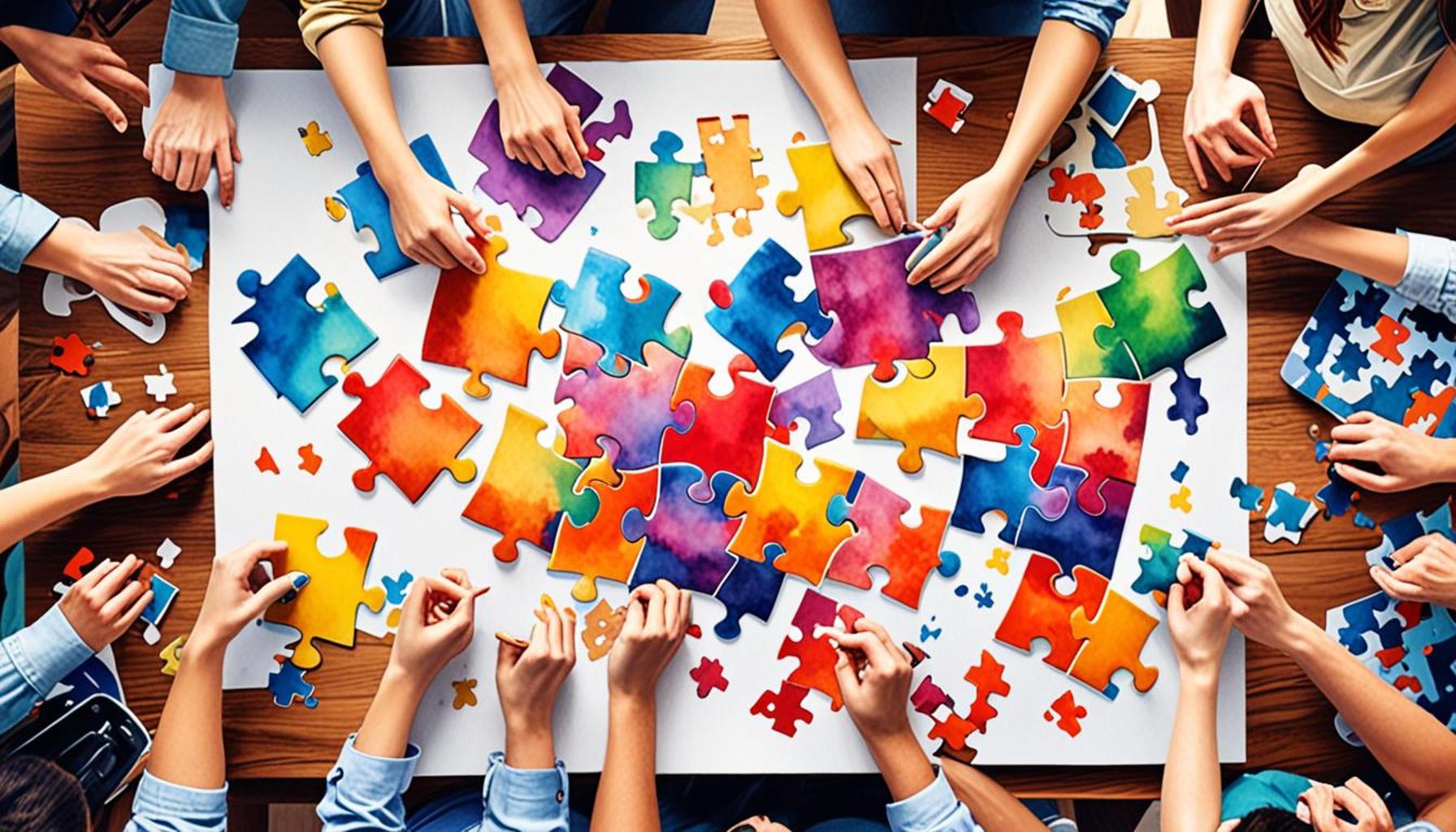
As teams gather around a table to piece together a puzzle, they participate in a dynamic interplay of cognitive and social skills. This interaction is vital for understanding how group dynamics shape social cohesion. Through problem-solving in a collaborative setting, individuals build relationships, enhance communication, and learn the importance of trust. The mechanisms behind these transformations are ripe for exploration.
A deeper look into the psychology of teamwork reveals that puzzle-solving serves as a powerful tool for enhancing collaborative skills. Engaging in a puzzle requires more than just individual intellect; it necessitates a collective effort where each member’s strengths contribute toward a unified outcome. The process promotes a synergy that encourages active participation and investment from all team members.
- Improved Cognitive Function: Solving puzzles stimulates mental faculties, enhancing not just individual problem-solving skills but also collective reasoning. Research has shown that efforts are maximized when team members share their insights and reasoning processes. This collective cognition is crucial in industries where innovative solutions are paramount, such as technology and engineering.
- Increased Participation: Participants in puzzle-solving scenarios often experience a sense of equity. Everyone’s input is valuable, leading to higher engagement levels. When individuals feel empowered, they are more likely to actively contribute to the overall goal, cultivating an environment where ideas flow freely, leading to creative solutions.
- Promotion of Empathy: As team members navigate the challenges of completing a puzzle, they are compelled to consider different perspectives, which nurtures empathy. This not only strengthens the social fabric of the team but also enhances the ability to work collaboratively in future endeavors.
- Development of Leadership Skills: Puzzle-solving often reveals natural leaders within teams. Those who exhibit strong problem-solving strategies can guide others and help navigate challenges, bolstering their leadership attributes. Such experiences prepare individuals for leadership roles in more complex settings, showcasing the benefit of teamwork dynamics.
The positive correlation between puzzle-solving and social cohesion is evident in studies across different contexts, from classrooms to corporate environments. Findings suggest that organizations engaging in team-oriented activities, such as puzzle challenges, not only witness an uptick in camaraderie but also an improvement in overall productivity. The rise of remote work has further underscored the importance of fostering connections through innovative problem-solving methods, reinforcing that teamwork is essential in maintaining workplace morale.
As we delve into the essence of teamwork, the lessons drawn from puzzle-solving scenarios illuminate the path to greater social cohesion. These insights reveal that beyond mere entertainment, collaborative puzzle activities create opportunities for individuals to connect, engage, and thrive within their teams. This not only enriches the immediate experience but also lays a robust foundation for future successes.
Exploring the Benefits of Team Puzzle Solving
In today’s fast-paced world, fostering social cohesion within teams is more important than ever. Engaging in activities that promote collaboration and critical thinking can significantly enhance team dynamics. One highly effective method is solving puzzles together. By encouraging teamwork in a fun and mentally stimulating way, organizations can cultivate a more harmonious workplace. This section dives into the various benefits that arise from such collaborative problem-solving experiences.
Solving puzzles as a group not only encourages communication but also builds trust among team members. Working towards a common goal allows individuals to appreciate each other’s strengths, increasing overall cohesion. Research indicates that teams which participate in group puzzle activities report higher satisfaction levels and decreased conflict.
Moreover, these activities improve cognitive functioning by engaging team members in critical thinking and creativity. As participants brainstorm solutions, they enhance their problem-solving skills and emotional intelligence. Effective group dynamics are often driven by improved communication and empathy, both of which are nurtured through such interactive experiences.
Furthermore, the enjoyment and bonding experienced during puzzle-solving sessions create lasting memories. As these chords of connection deepen, the team evolves into a more unified group, resulting in greater productivity and workplace harmony.
| Category | Description |
|---|---|
| Trust Building | Encourages openness and reliance on teammates. |
| Enhanced Communication | Fosters better interaction and constructive feedback. |
| Problem-Solving Skills | Challenges teams to think critically and creatively. |
| Increased Bonding | Creates shared experiences and memories among team members. |
Engaging in puzzle solving together not only strengthens the fabric of teams but also leads to more effective collaboration. As we explore additional strategies for enhancing group dynamics, understanding the role of fun and engaging activities becomes essential for fostering a cohesive work environment.
DIVE DEEPER: Click here to discover more
Leveraging Puzzle Challenges to Build Social Bonds
Engaging in puzzle-solving as a team offers distinct opportunities for deepening interpersonal relationships and fostering a sense of community. Participating in activities that require collective effort and critical thinking is akin to undergoing a rite of passage, reinforcing social bonds among individuals. The experiential learning environment created during these collaborative sessions enhances group dynamics and can lead to lasting friendships and professional networks.
Recognizing the significant impact of shared experiences is crucial. According to studies, when individuals work together to solve puzzles, they unleash powerful group cohesion effects that can be observed in various environments—from educational settings to corporate boardrooms. Research indicates that teams that participate in such collaborative exercises exhibit lower levels of conflict and higher overall satisfaction.
- Building Trust Through Vulnerability: Team members often reveal their thought processes and problem-solving strategies during puzzle-solving tasks. This vulnerability fosters an environment of trust and understanding. The act of requiring assistance or expressing uncertainty about a puzzle piece creates a mutual dependency among team members, which can significantly strengthen their emotional connections.
- Cultivating a Positive Team Identity: Puzzle-solving encourages a sense of belonging and identity within the group. As team members strive towards a common goal, they share in the victories of completing sections of the puzzle. This shared success enhances the team’s unique identity, providing a narrative that team members can rally around. It also serves to reinforce the idea of collaboration as a vital component of success.
- Facilitating Cultural Exchange: In diverse teams, puzzle challenges provide a platform for individuals to bring unique perspectives and cultural insights. The process of approaching a puzzle can vary significantly and, when communicated, allows for a richer collaborative experience. Such cultural exchange broadens cognitive approaches and enhances the team’s overall problem-solving capabilities.
- Boosting Morale and Reducing Stress: The light-hearted nature of puzzle-solving can provide a much-needed break from the stresses of work or study. Engaging in these tasks allows team members to bond over shared laughter and enjoyment. This positive interaction not only creates a relaxed atmosphere but also enhances overall morale, reminding individuals that teamwork is not solely about productivity but also about enjoyment and connection.
As the modern workplace evolves, especially with the rise of remote and hybrid work models, innovative methods to enhance team cohesion are increasingly valuable. Employers are recognizing the merit of incorporating puzzle-solving activities into team-building initiatives. Virtual puzzles, for instance, have become increasingly popular, allowing teams to navigate through challenges regardless of geographical barriers. These activities not only elevate team spirit but also help reinforce the notion that collaboration is indispensable for success in any organizational framework.
Furthermore, the emotional and cognitive engagement that comes with puzzle-solving helps equip teams with essential skills necessary for navigating real-world challenges. The shared experience creates a common language for discussing future projects, allowing team members to draw on their collaborative history to innovate and problem-solve effectively in competitive environments.
DISCOVER MORE: Click here to dive deeper
Conclusion: The Transformative Power of Puzzle Collaboration
In conclusion, the intersection of group dynamics and puzzle-solving provides a unique framework for enhancing social cohesion among team members. The collaborative nature of tackling puzzles cultivates an environment where trust flourishes, diverse perspectives are embraced, and collective identities are formed. As teams learn to rely on one another, the vulnerability exposed through these activities lays the groundwork for deeper relationships that extend beyond the immediate task at hand.
The findings underscore that shared experiences, like solving puzzles, are instrumental in minimizing conflict, boosting morale, and fostering a sense of belonging within a group. As individuals come together to solve challenges, they not only achieve a tangible result but also reinforce the values of cooperation and unity. Additionally, in our increasingly digital world, variations of puzzle-solving—such as virtual platforms—are becoming essential tools for bridging geographical gaps, allowing teams to maintain cohesion regardless of physical distance.
Ultimately, engaging in puzzles does not merely serve as a fun diversion; it is a strategic investment in enhancing team dynamics. This approach equips teams with the emotional and cognitive tools needed to tackle complex projects and navigate future challenges. By championing collaboration and creativity through puzzle-solving, organizations can create a strong foundation for success in every endeavor, cultivating not just effective teams, but resilient communities.