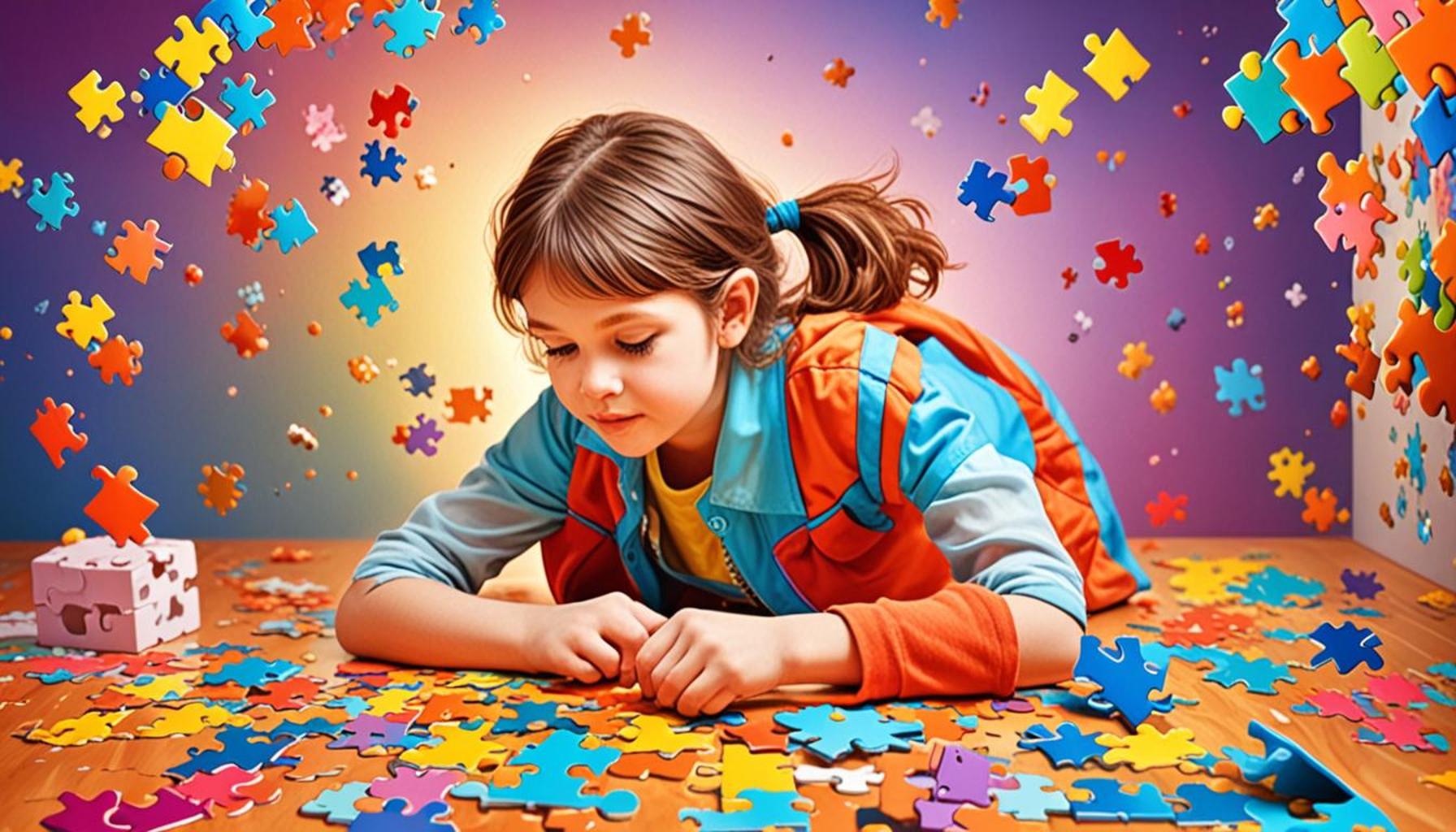
The Impact of Puzzle Solving on Cognitive Flexibility in Early Childhood
Cognitive Flexibility Explained
In the rapidly evolving landscape of early childhood education, puzzle solving emerges as a remarkable tool that stimulates cognitive development. It becomes apparent that facilitating cognitive flexibility—the ability to adapt one’s thinking and behavior in response to new information or shifting circumstances—plays a pivotal role in a child’s overall learning journey. This adaptable mindset is not just a beneficial trait; it’s essential for a child’s success in various areas of life.
Understanding the significance of cognitive flexibility unveils its importance in several key areas:
- Approaching challenges with creativity: Children who exhibit cognitive flexibility can think outside the box, allowing them to develop innovative strategies when faced with difficulties. For instance, when constructing a puzzle, a child may initially struggle; however, their ability to alter their approach often leads to a unique solution, showcasing their creativity.
- Finding multiple solutions to problems: The skill of recognizing varied paths to a solution is a hallmark of cognitive flexibility. By engaging with puzzles, children learn that there’s often more than one way to complete a task, promoting divergent thinking.
- Transitioning smoothly between tasks: Young learners facing a range of activities—from art to math—benefit significantly from cognitive flexibility. Those who can switch gears effectively are less likely to become frustrated, helping them stay engaged with their learning.
Research highlights that puzzle activities specifically enhance these aspects of cognitive flexibility. When children manipulate pieces and consider spatial relationships, they unknowingly exercise their brains in several impactful ways:
- Improved problem-solving skills: Puzzles promote critical thinking as children must assess situations and make decisions based on their observations. For example, figuring out where a piece fits not only enhances spatial reasoning but fosters a proactive problem-solving mindset.
- Enhanced memory: Retaining the specific shapes, colors, and patterns of puzzle pieces significantly boosts memory retention. Engaging their memory muscles helps children recall information more effectively in other tasks.
- Boosted social skills: Collaborative puzzle-solving enhances children’s social development. As they work alongside peers or family, they practice important skills such as communication, negotiation, and teamwork—building the foundation for healthy relationships and interpersonal skills.
As educators and parents alike seek effective ways to support cognitive growth in young learners, grasping the relationship between puzzle solving and cognitive flexibility is increasingly vital. The implications of this connection can redefine childhood learning experiences and set the stage for lifelong skills. For example, incorporating puzzles into playtime not only serves as entertainment but also nurtures children’s cognitive abilities, preparing them for success in a dynamic world.
In conclusion, nurturing cognitive flexibility through puzzle solving not only equips children with the tools to face immediate challenges but also lays the groundwork for their future endeavors, making this an area worthy of exploration for anyone invested in childhood development.
DIVE DEEPER: Click here to unlock the power of puzzles
The Role of Puzzles in Enhancing Cognitive Flexibility
Puzzle solving presents an engaging and multifaceted opportunity to foster cognitive flexibility in young children. As they learn to fit pieces together and navigate challenges, a wealth of cognitive skills are put into action. This process not only encourages physical manipulation of objects but also engages various mental processes that are crucial for developing adaptability and resilience. For instance, a child confronted with a puzzle that doesn’t easily conform to expectations must pivot their thinking, exploring alternative solutions and strategies. This dynamic interplay between action and thought is foundational for building cognitive flexibility.
The importance of this cognitive skill cannot be overstated, particularly in the context of early childhood—a critical period for brain development. Cognitive flexibility is closely linked to children’s ability to adjust to new situations, understand multiple perspectives, and maintain focus despite distractions. All of these elements contribute significantly to a child’s ability to succeed in school and their overall social development.
Here are some significant ways that puzzle solving promotes cognitive flexibility:
- Encouraging Spatial Awareness: As kids manipulate puzzle pieces, they develop a keen sense of spatial relationships. This enhanced spatial awareness is not just crucial for puzzles but is also a core competency in various academic areas such as math and science.
- Promoting Logical Reasoning: Progressing through a puzzle requires children to apply logical reasoning skills. By determining which pieces fit together and anticipating the structure of the completed puzzle, children experience firsthand the essence of logical thinking—an essential aspect of cognitive flexibility.
- Facilitating Emotional Regulation: Completing puzzles brings a sense of accomplishment. When children experience frustration, learning to manage those emotions becomes paramount. This resilience building translates into improved emotional regulation skills, helping kids navigate challenges both on and off the puzzle table.
Engaging in puzzle solving not only empowers children cognitively but also provides an avenue for intrinsic motivation. As they master increasingly complex puzzles, their sense of independence and self-efficacy grows. These experiences teach young learners that perseverance often leads to success, a crucial lesson that contributes to both their cognitive flexibility and overall character development.
For educators, incorporating puzzles into the curriculum is not merely an innovative teaching technique; it offers a structured yet fun way to nurture vital cognitive skills. Moreover, as the importance of social-emotional learning is increasingly recognized, these activities can be tailored to include collaborative puzzle-solving, further enhancing the benefits of teamwork and communication skills.
The profound impact of puzzle solving on cognitive flexibility in early childhood illustrates why these activities should be an integral part of educational frameworks. By encouraging exploration through play, educators and parents alike can create enriching learning environments that set the stage for both immediate and long-term cognitive benefits, equipping children with the adaptable skills needed for life’s future challenges.
The Impact of Puzzle Solving on Cognitive Flexibility in Early Childhood
Puzzle solving serves as a crucial activity in the development of cognitive flexibility among young children. This inherent ability allows children to adapt their thinking when faced with new or unexpected situations. Engaging with puzzles not only fosters problem-solving skills but also nurtures creativity and critical thinking, essential components of cognitive flexibility.
Developmental Milestones
Research indicates that as children manipulate puzzle pieces, they learn to shift their strategies and reconsider their approaches. This iterative process directly correlates with improved adaptability. Children learn to identify patterns, make decisions based on visual cues, and explore alternative solutions, which enhances their overall cognitive development.
Social Interaction and Teamwork
Furthermore, puzzle solving often occurs in collaborative settings, promoting important social skills. This interaction encourages sharing and communication, allowing children to express their thought processes and learn from their peers. Such collaborative problem-solving experiences can lead to enhanced understanding of different perspectives, further boosting cognitive flexibility.
Long-Term Benefits
The benefits of puzzle solving in early childhood extend beyond immediate cognitive gains. Engaging in these activities can foster a lifelong passion for learning and adaptability in various life situations. As children grow, the skills acquired through puzzle solving can manifest in academic success and effective social interactions, highlighting the importance of integrating puzzles into early childhood education.
| Advantage | Description |
|---|---|
| Enhanced Problem-Solving Skills | Puzzles require children to think critically and devise solutions, strengthening their capacity to tackle challenges. |
| Social Development | Working together on puzzles fosters teamwork and communication, essential for successful interactions in the future. |
The pivotal role of puzzle solving in early childhood education cannot be overstated. With the right tools and opportunities, educators and parents can facilitate an environment that promotes cognitive flexibility, setting the foundation for lifelong learning and adaptability.
DISCOVER MORE: Click here to uncover the benefits of Sudoku
Developmental Insights and Broader Implications
Puzzle solving in early childhood not only enhances cognitive flexibility but also serves as a lens through which we can understand broader developmental principles. As children engage with puzzles, they do so within different contexts—whether at home, in classrooms, or in group settings. These environments play a crucial role in shaping the benefits derived from these activities. Studies suggest that children who frequently engage in interactive puzzle play tend to demonstrate stronger overall cognitive skills compared to their peers who participate in less stimulating tasks.
Moreover, the diverse types of puzzles available today—from 3D shapes to digital apps—allow children to explore and challenge themselves in unique ways. For example, according to a research article published in the Journal of Educational Psychology, children exposed to varied puzzle formats not only develop enhanced cognitive flexibility but also show greater adaptability when faced with novel problem-solving scenarios. This adaptability is evident in academic performance, where children display improved mathematical reasoning and spatial visualization skills.
One key factor is the age-appropriateness of the puzzles being used. The cognitive load must be balanced to keep children engaged without overwhelming them. When children struggle with puzzles that are too challenging, they may become frustrated, which can undermine the very flexibility that is being cultivated. On the other hand, puzzles that are too simple may not stimulate necessary cognitive processes. Educational experts recommend a progressive approach, gradually increasing difficulty as children complete lower-level puzzles with ease.
In addition to enhancing cognitive flexibility, puzzles promote social collaboration. Collaborative puzzle-solving not only provides an opportunity to improve problem-solving skills collectively but also fosters communication and negotiation abilities. As children articulate their thoughts and strategies while working together, they learn to respect different viewpoints, which is essential for social development. This aspect of teamwork corresponds to findings in developmental psychology that highlight the importance of peer interactions in cognitive growth.
It’s also noteworthy that puzzle-solving activities can have a significant impact on family dynamics. When parents engage in puzzle-solving activities with children, it creates a playful bonding experience that encourages both emotional and cognitive development. Research from the American Psychological Association indicates that such interactions strengthen the parent-child relationship, leading to increased confidence and a deeper understanding of how to navigate challenges.
The diversity of puzzles available presents a wealth of opportunities for parents and educators. From traditional wooden puzzles to more complex interactive options like jigsaw puzzles featuring themes from popular media, there is something for every child. Incorporating art-themed puzzles can also bolster creativity while intersecting with cognitive development. This cross-disciplinary approach demonstrates how multiple forms of play can be integrated to enhance overall learning outcomes.
In summary, while the immediate cognitive benefits of puzzle solving are clear, the practice fosters a complex interplay of skills that extend into various facets of a child’s development. Young learners gain resilience through challenges, collaborative skills through teamwork, and social competencies through dialogue—equipping them with the cognitive flexibility essential for a dynamic future. These rich layers of experience underscore the necessity of designing educational curricula that prioritize puzzle-solving activities as fundamental components of early childhood learning.
DISCOVER MORE: Click here to enhance your mental clarity
Conclusion
In conclusion, the impact of puzzle solving on cognitive flexibility in early childhood is a multifaceted phenomenon that extends beyond mere entertainment. Engaging with puzzles aids in the development of critical thinking skills, problem-solving abilities, and adaptive reasoning. Research consistently highlights that children who actively participate in puzzle-solving activities not only experience improvements in cognitive flexibility but also enhance their overall academic performance. This engaging play provides invaluable opportunities for young learners to tackle challenges head-on, fostering resilience and a sense of accomplishment.
Moreover, the interactive nature of puzzle-solving promotes social collaboration among peers and family members. These collaborative experiences lead to improved communication and negotiation skills, further contributing to a child’s social and emotional development. Participating in puzzle-solving activities with caregivers can also strengthen relationships, fostering an environment rich in support and encouragement.
As the range of available puzzles continues to expand, from traditional wooden pieces to innovative digital formats, parents and educators are afforded numerous tools to enhance cognitive development. By recognizing the substantial benefits that puzzle-solving can offer, stakeholders in early childhood education can prioritize these enriching activities as central elements of learning curricula. This proactive approach ensures that children not only develop cognitive flexibility but are also equipped with the necessary life skills to thrive in an ever-changing world.
Ultimately, by embracing the power of puzzle-solving, we can cultivate a generation of adaptable, resilient, and creatively-minded individuals ready to navigate the complexities of the future.