
Collaborative Puzzles: The Power of Problem Solving in Online Communities and Social Groups
The Rise of Community-Driven Problem Solving
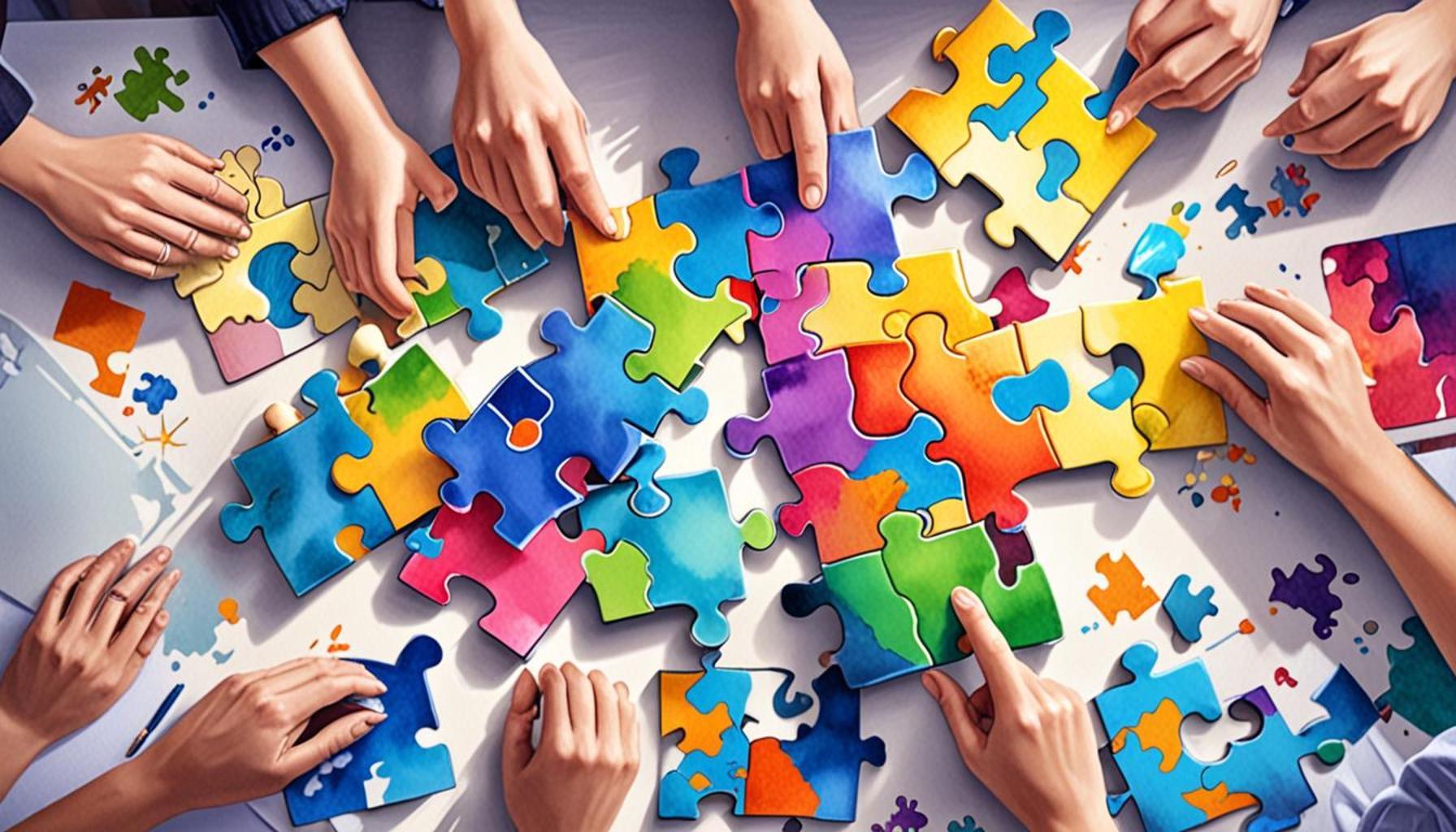
In today’s digital age, problem-solving has transformed into a community-driven activity, where collaboration reigns supreme. People from diverse backgrounds come together to tackle challenges that require not just individual effort, but a unification of ideas. This shift in approach is significantly influenced by online platforms that allow groups to harness collective intelligence in remarkable ways, leading to innovative outcomes.
Consider these aspects of collaborative puzzles:
- Community Engagement: Online forums and social media groups invite participants to solve intricate problems together. For example, subreddits dedicated to various challenges enable individuals to share their insights and solutions in real time, creating a vibrant community focused on collective problem-solving.
- Diverse Perspectives: Members bring unique insights that can lead to innovative solutions. A project on a platform like Facebook can garner input from professionals and amateurs alike, allowing for a richer dialogue that can spark creativity and lead to unexpected breakthroughs.
- Increased Participation: Gamified approaches make engaging in problem-solving appealing and accessible. Websites that offer challenges with rewards not only motivate users to participate but also cultivate a sense of camaraderie among participants as they strive towards a common goal.
Let’s take a closer look at the significance of this social phenomenon, particularly how it manifests in platforms such as Reddit, Facebook, and dedicated puzzle-solving websites. The sharing of knowledge and collaborative efforts not only enhance problem-solving techniques but also create a rich tapestry of social interaction. For instance, initiatives like “The Great Internet Mersenne Prime Search” (GIMPS) exemplify how collective intelligence can be harnessed for groundbreaking discoveries, such as finding increasingly large prime numbers, by utilizing the computing power of thousands of volunteers around the globe.
As we delve deeper, we will explore the underlying mechanics that make collaborative puzzles an effective tool in both online communities and local social groups. The evolution of platforms such as Stack Exchange demonstrates how users can seek help and provide solutions across diverse topics, ranging from coding to cooking. This transformation is not just about solving puzzles; it’s about reshaping the way we connect with each other, foster relationships, and approach problem-solving in our daily lives.
The implications of this trend extend beyond digital interactions. It encourages the building of local networks where individuals come together to apply collective intelligence in their communities. Local hackathons, community clean-up initiatives, or neighborhood brainstorming sessions serve as fertile ground for collaborative problem-solving, demonstrating that the power of ideas can have real-world applications. In essence, this trend is reshaping the way we approach problems and build connections in the process, paving the way for a more interconnected and innovative society.

DISCOVER MORE: Click here to learn how collaborative puzzles can enhance your social bonds
The Mechanisms Behind Collaborative Puzzles
The phenomenon of collaborative puzzles relies heavily on the dynamics that facilitate constructive engagement among participants. When users come together on platforms like Reddit or Facebook, they operate not merely as individuals but as parts of a larger network. Here are some fundamental mechanisms that make this group problem-solving effective:
- Shared Resources: In online communities, a wealth of shared knowledge can be accessed, including articles, tutorials, and videos. This abundance allows users to draw upon existing resources that can inform their contributions and elevate the quality of solutions proposed.
- Crowdsourced Knowledge: These platforms readily employ a crowdsourced approach to problem-solving, allowing community members to pool their insights. Whether it’s technical support or creative project design, the wisdom of the crowd often yields solutions that a single individual may overlook.
- Networking Opportunities: Collaborative puzzles foster endearing connections among members, leading to further engagement. People often transition from solving one puzzle together to collaborating on future projects or initiatives, creating a ripple effect of creativity and support.
Moreover, the synergetic nature of collaborative puzzles extends beyond mere solutions. They encourage the culture of continuous learning. For instance, platforms like Stack Overflow leverage community contributions to aggregate a comprehensive database of answers to programming questions. This not only aids those seeking solutions but also empowers contributors to refine their skills in the process.
These digital engagements mirror established communities where members rally around local issues. Whether it is through neighborhood forums that propose innovative ways to conserve resources or community outreach programs addressing social challenges, the principles of collaborative problem-solving remain consistent. For instance, hackathons, which have gained traction across the United States, invite diverse individuals to tackle specific issues in an intensive, cooperative effort, showcasing how community-driven solutions can yield significant outcomes within time constraints.
Additionally, the localized aspect of collaborative puzzle-solving resonates significantly within urban and rural settings. Community centers and online platforms alike embrace the idea that individuals with diverse backgrounds can shine a light on the multifaceted nature of various problems. An event like a community clean-up can leverage social media to gather volunteers, facilitate discussions on environmental challenges, and create action plans grounded in collective feedback.
As we explore further, it’s evident that the mechanisms designed to encourage cooperative problem-solving nurtures a culture of collaboration that transcends individual capabilities. The significant question becomes: how do these platforms and initiatives foster not only effective problem-solving but also cultivate lasting relationships among members? An exploration into this aspect will uncover the enriched social fabric woven through shared experiences in both online and offline communities.
| Advantages | Impact on Community Engagement |
|---|---|
| Enhanced Communication Skills | Participants learn to express their ideas clearly and listen actively, fostering an open dialogue. |
| Increased Problem-Solving Capacity | Collaborative puzzles encourage diverse perspectives, leading to innovative solutions and better decision-making. |
| Building Trust and Relationships | Engaging in cooperative tasks strengthens bonds among members, creating a supportive environment. |
| Collective Intelligence | Harnessing the combined skills and knowledge of the group raises the overall intelligence of the community. |
Collaborative problem-solving transcends the individual limits of knowledge and fosters a spirit of teamwork. When engaging with diverse viewpoints in online communities, participants can challenge assumptions and develop a deeper understanding of complex issues. This is especially powerful in social groups, where differing backgrounds contribute to richer dialogues. Moreover, through platforms that support shared learning experiences, users can explore new strategies and solutions that might not surface in isolative environments. The transformative aspect of collaborative puzzles lies in their ability to galvanize participants into taking action—be it for social change, community projects, or personal development. As members discover their unique contributions within the group, they often find a renewed sense of purpose and belonging, enabling them to tackle challenges head-on with collective momentum.
DISCOVER MORE: Click here to uncover the therapeutic benefits of puzzles
The Social Fabric of Collaborative Problem-Solving
As we delve deeper into the role of collaborative puzzles within social groups and online communities, we observe that their impact is not confined to account-solving alone; rather, they intricately interweave social interaction, trust-building, and collective identity. This section analyzes how these factors contribute to a vibrant culture of problem-solving.
Community Trust and Safety is paramount when fostering an environment conducive to open collaboration. In platforms like GitHub or Quora, users often engage in conversations that involve sharing personal experiences and insights. Over time, this transparency breeds trust, essential for participants to feel comfortable sharing their ideas and solutions without fear of criticism. A transparent model not only enhances the quality of contributions but also empowers individuals to take risks in their problem-solving approaches.
Moreover, collaborative puzzles often lead to the development of a collective identity among participants. When individuals come together under a common goal, they form social ties and allegiances, creating a shared sense of purpose. This phenomenon can be observed in various gaming communities, where players unite to tackle challenges collaboratively, building camaraderie that extends beyond the online realm into real-life friendships.
Additionally, the role of recognition and reward cannot be overstated in maintaining participant motivation and group cohesion. Many online communities incorporate gamification elements, such as badges, leaderboards, and virtual currency, to acknowledge contributors. These systems provide tangible evidence of one’s involvement and expertise, fostering a competitive yet supportive atmosphere conducive to innovative thought. An exemplary case can be found on platforms like Stack Exchange, where users earn reputation points that validate their input, sparking ongoing engagement.
In a broader context, collaborative puzzles significantly impact civic engagement, encouraging group members to tackle local issues. Socially driven platforms like Nextdoor help communities come together to address neighborhood challenges, from crime prevention to local park revitalization. These forums inspire individuals to collaborate, harnessing their unique skill sets and perspectives. Events organized through these platforms often lead to tangible improvements and a stronger sense of community.
Another noteworthy aspect of collaborative puzzles lies in their ability to fuel creativity and innovation. The convergence of diverse perspectives often creates a breeding ground for new ideas. For example, when artists, engineers, and activists collaborate on social change initiatives, they generate creative solutions that might not emerge within siloed groups. Initiatives like the Code for America project illustrate this phenomenon, bringing together technologists, designers, and civic leaders to devise innovative public services that better serve citizens.
However, the vibrant tapestry of collaboration is not without its challenges. The phenomenon of groupthink looms large, wherein the desire for consensus may stifle individuality; hence, it becomes imperative for communities to strike a balance between existing ideas and unique contributions. Encouraging dissent and welcoming diverse viewpoints can counteract this tendency, leading to richer discussions and more effective problem-solving outcomes.
As we uncover these layers of social mechanics in collaborative puzzle-solving, the transformational power of connection, shared knowledge, and mutual trust stands at the forefront of community engagement. Exploring specific case studies and tangible outcomes further illuminates how these relationships foster solutions that resonate within society at large.
DISCOVER MORE: Click here to learn about puzzle solving and cognitive flexibility
Conclusion: The Transformative Impact of Collaborative Problem Solving
In an increasingly interconnected world, collaborative puzzles serve as a fertile ground for fostering teamwork, creativity, and social cohesion within online communities and social groups. As we have explored throughout this article, the mechanisms that underpin successful collaboration—such as trust, recognition, and a collective identity—are instrumental in driving engagement and innovation. These factors not only transform individual participants but also catalyze meaningful change within the broader community.
The power of collaborative problem solving is evident in its ability to merge diverse perspectives, leading to innovative solutions that might remain dormant in isolated environments. The inclusive nature of platforms like GitHub, Stack Exchange, and Nextdoor amplifies voices, encouraging individuals to contribute their unique talents and ideas. As seen in successful case studies, these collective efforts often translate into real-world impact, whether it’s revitalizing local neighborhoods or developing groundbreaking public services.
However, as we celebrate these achievements, it is crucial to remain vigilant against the challenges that can arise in collaborative settings, such as groupthink and the suppression of innovative dissent. Addressing these challenges head-on, by fostering an environment that values diverse viewpoints, can refine problem-solving processes and yield richer discussions. As we stand at the intersection of technology and social interaction, the journey of collaborative puzzles invites us to further explore the potential of collective intelligence, reminding us that in our shared endeavors lies the key not just to problem-solving, but to thriving communities.